
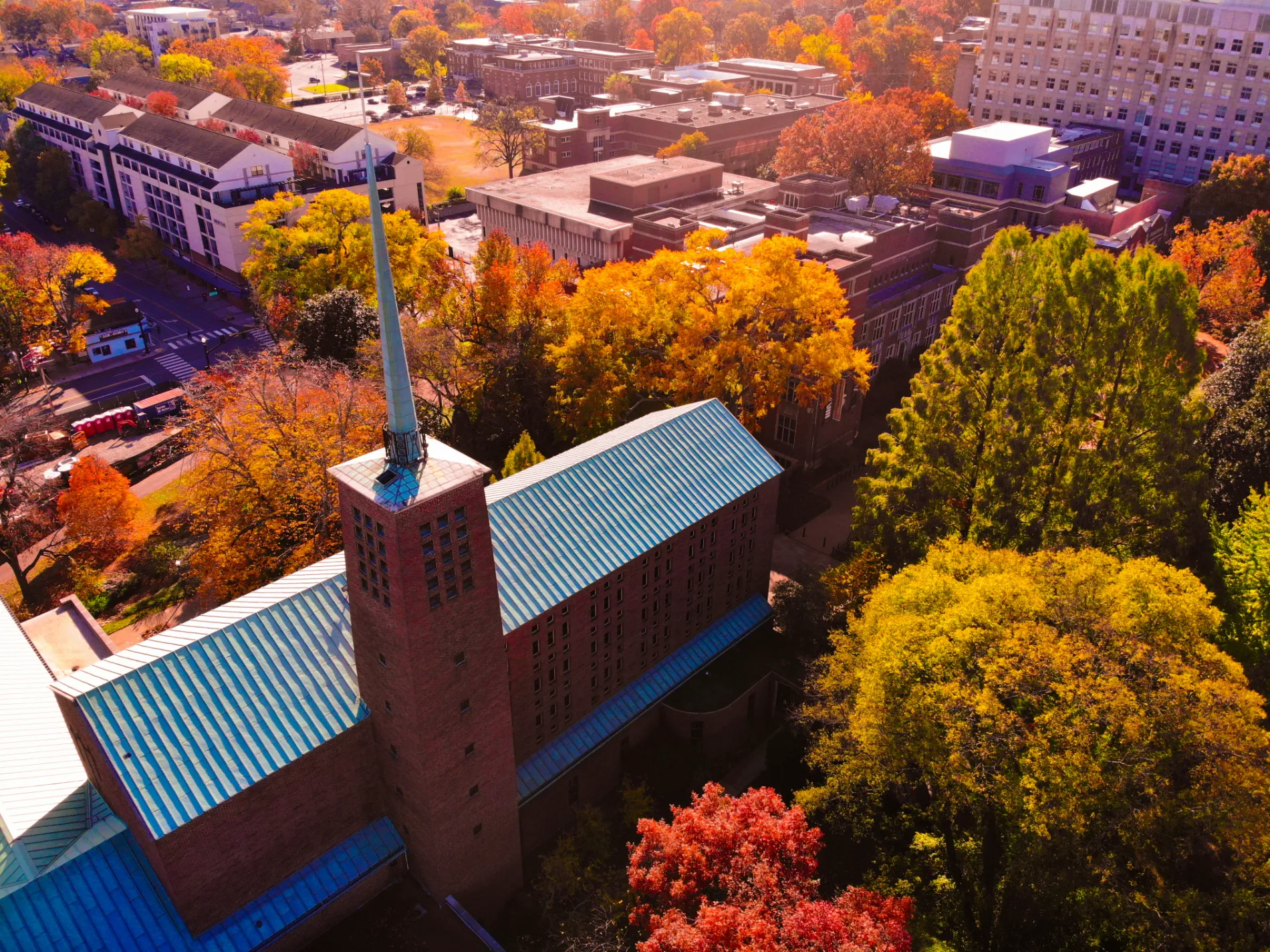
Vanderbilt University & Nashville Real Estate: The Full Market Impact
With a $22 billion economic footprint and over 120,000 jobs, Vanderbilt University is one of the most powerful forces shaping Nashville property values, rental demand, and neighborhood character across Middle Tennessee.
If you’re researching Nashville real estate — whether you’re buying a home, evaluating a rental investment, or simply trying to understand why property values in certain neighborhoods command such strong premiums — Vanderbilt University belongs at the center of your analysis.
Founded in 1873 on a 330-acre campus in Midtown Nashville, Vanderbilt and its affiliated Vanderbilt University Medical Center (VUMC) have grown into the city’s largest private employer and its most consequential economic anchor. Understanding how that institutional gravity translates into real estate market dynamics is essential for anyone with a stake in Nashville property.
Real estate fundamentally follows employment. Nashville’s sustained housing demand — even as mortgage rates have climbed and national markets have cooled — is grounded in an unusually stable employment base, with Vanderbilt and VUMC at its core.
Together, the two institutions directly employ approximately 50,000 people and generate around 120,000 total jobs in the Nashville metropolitan area. That workforce spans physicians, researchers, faculty, nurses, administrators, and support staff — all of whom need housing. Unlike sectors prone to cyclical layoffs, a major research university and academic medical center create permanent, recession-resistant demand. Enrollment doesn’t evaporate in a downturn. Patient volumes don’t disappear when interest rates rise.
Students add a separate and equally consistent demand layer. Vanderbilt’s student body generates approximately $225 million in annual local spending on housing and living expenses, sustaining a dense ecosystem of rental units, coffee shops, restaurants, and retail across adjacent neighborhoods.
Sources: Vanderbilt University 2025 Economic Impact Report (independent analysis by TXP Inc., Austin, TX)
The university’s influence radiates outward from its West End campus, shaping property values across a cluster of Nashville neighborhoods that rank among the most sought-after in the city. Here’s how the key areas break down:
Midtown / Vanderbilt ~$493/sq ft avg.
Bungalows, condos & townhomes; highly walkable; average listing ~$752K; prices reach $2M+
Hillsboro Village $400K–$500K range
Charming, walkable; popular with graduate students, faculty & young professionals
West End / Elliston Place $1,648–$5,426/mo rent
Dense rental inventory; Walk Score 88; strong proximity to VUMC
12 South & Sylvan Park Competitive appreciation
Spillover demand from the Vanderbilt corridor; popular with professionals
Properties in the immediate Vanderbilt neighborhood command a notable premium over broader Nashville averages. Single-family homes typically list between $400,000 and $500,000, with standout properties regularly exceeding $1 million. A price-per-square-foot average of approximately $493 sits well above many comparable Nashville submarkets, reflecting the neighborhood’s walkability, amenities, and sustained demand.
“The Vanderbilt area in Nashville is bustling with activity — a seemingly endless supply of restaurants, cafes, and coffee houses — while many interior streets remain quiet residential roadways that make for a great place to call home.”
For rental investors, the story around Vanderbilt is one of consistent pressure and structurally low vacancy. Demand is replenished each academic cycle: new students arrive, graduate students rotate in, medical residents begin hospital rotations. Landlords near campus rarely face the extended vacancies that plague seasonal or single-industry markets.
Average rent near Vanderbilt runs approximately $1,826 per month, with a wide range depending on unit size and proximity to campus. Hillsboro Village and West End are consistently identified — including in Vanderbilt’s own international student housing resources — as the most familiar and accessible neighborhoods for incoming residents, concentrating demand in those corridors.
Multi-bedroom properties are a popular play. Renting individual rooms to graduate students or young medical residents can generate yields that exceed what a single occupant would pay — though the approach requires active management and careful attention to Nashville’s local occupancy rules.
Important for investors: Nashville enforces zoning and occupancy regulations that can limit how many unrelated tenants may legally share a single-family home. Before committing to a multi-tenant strategy, verify current ordinances with a local real estate attorney or experienced property manager.
Vanderbilt’s influence on Nashville real estate extends far beyond its immediate neighborhood. The university and VUMC are regularly cited alongside HCA Healthcare and Amazon as the foundational pillars of Nashville’s employment base — a diversified, recession-resistant mix that analysts credit for sustaining home values even as affordability has tightened.
Nashville’s median listing price has held above $500,000 in recent periods. That level would be difficult to sustain without the consistent professional influx Vanderbilt drives. Major employers like Vanderbilt attract skilled workers from across the country, and those workers — many earning above-median incomes — compete for housing in desirable neighborhoods, supporting price floors across the metro.
The institution’s capital investment in the city compounds this effect. Between 2019 and 2024, Vanderbilt spent $2.2 billion on Nashville construction — including new residence halls, the expansion of the Owen Graduate School of Management, and VUMC’s Jim Ayers Tower. Large-scale institutional construction upgrades surrounding infrastructure and consistently attracts ancillary commercial and residential development.
In 2024, Vanderbilt and Nashville’s mayor launched the Nashville Innovation Alliance, a public-private initiative positioning the city as a hub for technology and research commercialization. Initiatives like this reinforce long-term appeal to educated, higher-earning residents who drive demand in premium housing submarkets.
A complete picture of Vanderbilt’s real estate impact has to include the other side of the ledger. A 2024 Vanderbilt University poll found that 82% of Davidson County residents believe they cannot afford to buy a home there, and nearly 80% feel the city is growing too quickly. The institutional engine that makes surrounding properties so valuable also contributes to a supply-demand imbalance that displaces longtime residents.
As buyers are priced out of neighborhoods closest to campus, demand spills into adjacent areas — Sylvan Park, the Nations, East Nashville — pushing prices upward there as well. Suburban markets including Murfreesboro, Clarksville, and Franklin have absorbed considerable overflow, with many Nashville workers commuting from communities where housing dollars stretch further.
Vanderbilt has acknowledged the pressure through its Nashville Catalyst Fund, a program specifically addressing affordable housing challenges. Policy interventions of this kind, while beneficial for communities, can introduce new zoning requirements or development incentives that reshape where and how rental investment makes sense over the long term — something investors should monitor closely.
Vanderbilt University functions as a durable anchor in Nashville’s real estate ecosystem. Its combination of a large stable workforce, a continuously rotating student population, significant capital investment, and institutional prestige creates the kind of sustained housing demand that investors prize — and that tends to protect property values through economic cycles that might otherwise erode them.
For homebuyers, proximity to Vanderbilt generally means purchasing into a neighborhood with high walkability, consistent amenities, a rich dining and retail corridor along West End and 21st Avenue, and a built-in pool of future buyers and tenants. Entry prices are premium, but so is the long-term stability.
For rental investors, the income story is compelling — average rents near campus support strong yield potential — but the premium pricing at entry requires careful cash flow analysis. Due diligence on local occupancy regulations, property management capacity, and realistic appreciation assumptions is essential before committing.
What’s clear is that in Nashville, Vanderbilt isn’t just part of the real estate landscape. In many meaningful ways, it defines it.